-
 Oceanus (Neptune), circa 1588/90
 -
Pietà , 1596
-
La Creazione del Mondo, dalle Metamorfosi di Ovidio GOD THE FATHER AND THE UNIVERSE, 1589
-
Titus Manlius Torquatus, from "The Roman Heroes", 1586
-
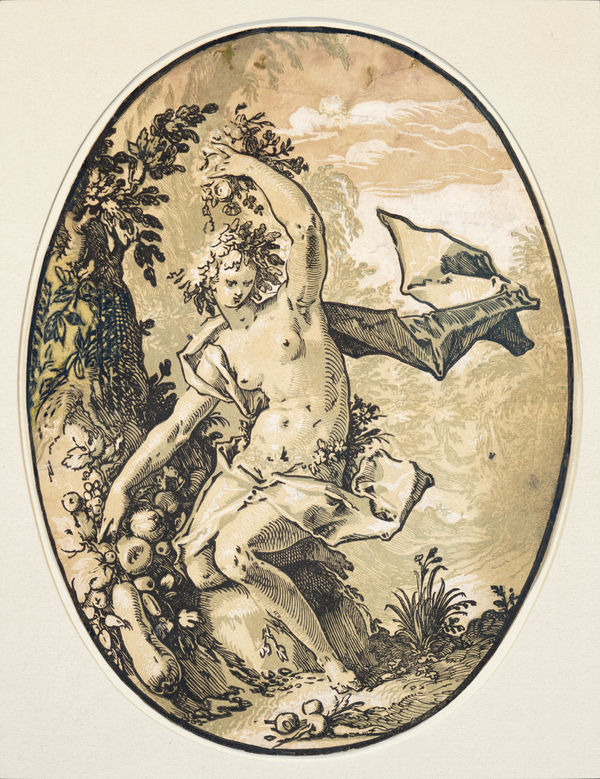
Proserpine



Hendrick[a] Goltzius (German: [ˈhɛndʁɪk ˈɡɔltsi̯ʊs], Dutch: [ˈɦɛndrɪk ˈxɔltsijʏs]; born Goltz; January or February 1558 – 1 January 1617) was a German-born Dutch printmaker, draftsman, and painter. He was the leading Dutch engraver of the early Baroque period, or Northern Mannerism, lauded for his sophisticated technique, technical mastership and "exuberance" of his compositions. According to A. Hyatt Mayor, Goltzius "was the last professional engraver who drew with the authority of a good painter and the last who invented many pictures for others to copy".[1] In the middle of his life he also began to produce paintings.
Goltzius was born near Viersen in Bracht or Millebrecht, a village then in the Duchy of Julich, now in the municipality Brüggen in North Rhine-Westphalia. His family moved to Duisburg when he was 3 years old. After studying painting on glass for some years under his father, he learned engraving from the Dutch polymath Dirck Volckertszoon Coornhert, who then lived in Cleves. In 1577 he moved with Coornhert to Haarlem in the Dutch Republic, where he remained based for the rest of his life. In the same town, he was also employed by Philip Galle to engrave a set of prints of the history of Lucretia.
-
Hoi Polloi
Exhibition 24 Sep 2025 - 8 Aug 2026 The Brown Collection, Marylebone, LondonDiscover Hoi Polloi at The Brown Collection, Marylebone – an exhibition curated by Glenn Brown exploring how artists depict ‘the people’ from the 1500s to today.Read more -
The Laughing Stock of the Heartless Stars
Exhibition 12 Sep 2024 - 9 Aug 2025 The Brown Collection, Marylebone, LondonThe Brown Collection presents an exhibition by Glenn Brown exploring the tension between humanity and nature, meaning and absurdity. Featuring over 70 works from the 16th century to today, the show reflects on creation, decay and the cosmic unknown.Read more

